Cart
Cart Products
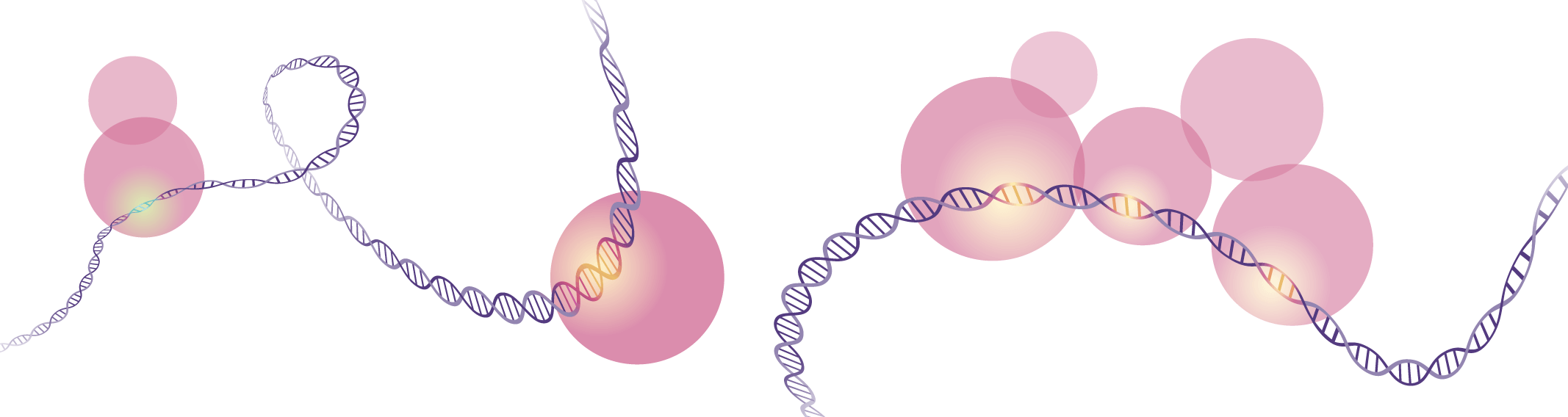
DNAのメチル化(5-mC)や5-hmCのようなメチル化バリアントは、遺伝子発現をはじめ、多くの生物学的プロセスの調節機構に寄与します。また、これらのエピジェネティックな修飾は、がん、老化、神経疾患、その他多くのヒト疾患における重要なバイオマーカーとなっています。
アクティブ・モティフは、DNAメチル化を研究するための製品と受託解析サービスを提供するリーティングカンパニーであることを誇りに思っています。当社の包括的な製品・サービスラインナップは、お客様がアッセイを行うための抗体やリコンビナントタンパク質の提供から、end-to-endエピジェネティクス受託サービスにおいて弊社の専門家によるアッセイやNGSおよびバイオインフォマティクスの実施まで幅広くサポートします。


濃縮をベースとした手法は、DNAのメチル化とヒドロキシメチル化をゲノムワイドまたは遺伝子特異的に研究することを可能とします。
MethylCollector™ MBD Capture Kit
5hmC Profiling Kit
Methylated DNA Immunopreciptation (MeDIP) Kit
hMeDIP Kit

ELISAベースのグローバルなDNAメチル化アッセイは、サンプル中の5-mCおよび5-hmCの全体的なレベルを調べるのに利用されます。
Global 5-hmC DNA ELISA Kit
Global DNA Methylation LINE-1
DNMT Assay
Methylated Jurkat DNA
Methylated DNA Standard Kit

最良のメチル化アッセイは最良の抗体を用いることから始まります。そしてアクティブ・モティフは、DNAメチル化を研究するために利用可能な最高品質で、最も品揃えの豊富な一連の抗体を提供しています。



Manuals
Data Sheets
Product Guides & Brochures
メチル化とは何か?
哺乳動物におけるDNAのメチル化は、発達や遺伝子発現の調節など異なる細胞機能において主要な役割を果たし、一般に、転写抑制に関連すると考えられています。DNAメチル基転移酵素 (DNA methyltransferase; DNMT)は、主にCpGジヌクレオチドモチーフにおいて、S-アデノシルメチオニン(SAM)のメチル基をシトシンの5’位に転移する反応を触媒します1。DNAのメチル化は、胎生期の発達やゲノムインプリンティング、X染色体の不活性化および遺伝子発現などの様々な細胞機能に関連します。DNAメチル化パターンの異常は、特定のヒト腫瘍や発達異常と関連することが知られています。
CpGアイランドとは、ゲノム内のCpGジヌクレオチドの出現頻度が通常予想される量に比べて高いDNA配列を指します。CpGアイランドはゲノムの約1%にしか存在しないにも関わらず、ヒト遺伝子プロモーターの60%以上で共通して見られます。CpGアイランドは通常メチル化されていませんが、プロモーター内のCpGアイランドがメチル化されるとそのプロモーターの関わる遺伝子は永久にサイレンシングされます。そして、このサイレンシングは有糸分裂により引き継がれます。このことは、CpGアイランドのメチル化が遺伝のエピジェネティックな手段であることを意味します。
DNMTファミリーとしてはDNMT1, DNMT2およびDNMT3の3種が同定されています。DNMT3ファミリーは、2つの活性型メチル基転移酵素DNMT3A, DNMT3Bと1つのDNMT3-Like (DNMT3L)タンパク質から含まれます。DNMT3AとDNMT3Bは親由来のCpGメチル化パターンに変更を加え、ヘミメチル化DNAと非メチル化二本鎖DNAを同程度にメチル化します。DNMT3Lは、システインに富んだDNMT3AおよびDNMT3BのN末領域に対して有意な相同性を示しますが、C末のメチル基転移酵素領域に対してはごくわずかな相同性しか示さず、DNAメチル基転移酵素の活性はありません。しかし、DNMT3LはDNMT3Aの補酵素として作用することによりDNAのメチル化パターンに影響を与えます2。DNMT1は、DNA複製中にメチル化状態を維持するための維持DNMTと考えられています。実際、この酵素は、ヘミメチル化DNAメチル基に特異性を示し、組織特異的なDNAメチル化パターンの確立と調節に関与しています3。DNMT2は、他の真核生物のメチル基転移酵素に共通する大きなN末調節ドメインを欠損していますが、触媒領域を持ちます。しかし、実際にはDNAをメチル化せず、アスパラギン酸tRNAの38番目のシトシンをメチル化することが報告されたため4、現在では機能を反映したTRDMT1 (tRNA aspartic acid methyltransferase 1)と呼ばれています。
クロマチンを抑制状態にするための一連の複雑な過程には、DNAメチル基転移酵素とメチル化CpG結合タンパク質(MBDタンパク質)と呼ばれる別のタンパク質の他、Kaisoファミリータンパク質の協調的な調節が関与します。MBDファミリータンパク質にはMeCP2, MBD1, MBD2, MBD3およびMBD4が含まれます5。MeCP2、MBD1およびMBD2が強いメチル基結合活性と転写抑制ドメインを持つのに対し6、MBD3はMBDドメインに決定的な変異があるためメチル化DNAに結合できません。MBD3は、哺乳動物細胞においてヌクレオソームの再構築とヒストン脱アセチル化の活性を有するMi-2/NuRD複合体を形成することにより転写を調節します7。MBD4は、DNA修復系の一部として、メチル化CpG部位における脱アミノ化産物を認識するチミングリコシラーゼです。MBD4は、ヘミメチル化DNAまたはメチル化CpG、T/Gミスマッチに結合することができます8。
哺乳動物の細胞において、DNAメチル化は一般に遺伝子抑制に関連しており、転写因子が認識配列に結合することを直接阻害したり9、DNAメチル化のパターンを「読む」MBDタンパク質との結合を介して、転写因子が標的部位にアクセスすることを間接的に阻害したりします。これらのMBDは、ヒストン脱アセチル化酵素およびヒストンメチル基転移酵素を動員することが可能であり、それによって閉じた抑制性クロマチン構造を形成します。
DNAメチル化とクロマチン修飾は密接に相互作用して転写を抑制します。DNMTとHDACとの会合はヒストンの脱アセチル化を誘導し、少なくともいくつかの例ではCpGのメチル化を引き起こします。例えば、DNMT1はHDAC2とコリプレッサーDMAP1に結合し、S期の後期に複製されるゲノム領域(replication foci)において複合体を形成します10。また、DNMT-HDAC相互作用は、酵素活性を持たないDNMTのN末部分を介します。DNMT3LはDNMT活性を持たないにも関わらず、HDACの抑制機構を動員することができます11。DNMTは、ヒストンH3の9番目のリジンを修飾するヒストンメチル基転移酵素(HMT)の活性と関連していると考えられており、Suv39hのようなHMTとの相互作用が関与している可能性が示唆されています12, 13。DNMTとHP1αおよびHP1βとの相互作用も示されています。また、H3K9トリメチル化(H3K9me3)は、セントロメア近傍のヘテロクロマチンに存在するメジャーサテライト(A/Tに富んだDNA配列)の反復する部位に、DNMT3Bを誘導できることも報告されています13。HP1などのアダプター分子に結合したDNMTは、ヒストンH3の9番目のリジン残基がメチル化されているクロマチン上のDNAにのみメチル基を付加します。DNMTとH3K9のメチル基転移酵素(例えばSuv39h)の相互作用は、DNMTに対するH3K9のメチル化状態に直接影響を与えます。これらはHDACとも接触し、部分的な遺伝子抑制を導きます。MBDはメチル化DNAにも動員されます。結合したMBDはH3K9メチル基転移酵素と相互作用し、リジンのメチル化を促進します。9番目のリジンがアセチル化されたヒストンH3 (H3K9ac)の脱アセチル化は、この残基でメチル化が起こるために必要です14。したがって、ヒストンH3の9番目のリジンにおける脱アセチル化に続いてヒストンのメチル化が起こり、その結果としてHP1のようなタンパク質が動員されます15。
発生と疾患にはDNAメチル化が関連するため、多くの研究においてDNAメチル化を正確に定量することが求められます。
DNA脱メチル化はどのように起こるのか?
DNA脱メチル化は、DNA合成中にメチル化を維持できなくなることにより受動的に起こります。しかし、父性前核(paternal pronucleus)は、最初の卵割によりほぼすべての父性メチル化を消失することから、能動的な脱メチル化過程の存在が示唆されていますが、この脱メチル化のメカニズムおよび関与する酵素は明らかになっていません。MDB2bが脱メチル化活性を示すかもしれないという最初の報告も、他の研究グループにより検証されていません。アクティブな脱メチル化は、シトシン塩基からメチル基を除去する酵素活性の結果かもしれませんが、これはエネルギー的に実行不可能であることから、別の機構が示唆されています。哺乳動物のグリコシラーゼは、植物のように効率的な脱メチル化できないようです。一方、デアミナーゼは5-mCをチミジン(T)に変換できることから、結果として生じるG:Tミスマッチがグリコシラーゼを誘引してTを除去し、Tは塩基除去修復酵素によりCに置換されます。候補となるグリコシラーゼにはMBD4とTDGが挙げられます。最近、DNMT3AとDNMT3Bがデアミナーゼとして機能し、活発に転写される遺伝子のプロモータにおいて急速な周期的メチル化と脱メチル化を触媒する説が提唱されています1, 16。
近年、DNAのCpGメチル化の第二の様式がエピジェネティックなイベントと関連付けられています。例えば、特定の細胞における5-hydroxymethylcytosine(5-hmC)の豊富な存在量と5-methylcytosine(5-mC)から5-hmCへの変換について論じた論文がいくつか発表されています17, 18。5-mCの5位のメチル基は、鉄依存性オキシゲナーゼであるTETファミリーにより酸化され5-hmCに変換されます。Tet1タンパク質によるさらなる酸化により、5-hmCは5-formylcytosine (5-fC)へと変換され、さらに5-carboxylcytosine (5-caC)へと順に変換されます22, 23。そして、最終的に5-caC修飾がチミンDNAグリコシラーゼ(TDG)によりゲノムDNAから除去されるまでの一連の反応によりDNAがアクティブに脱メチル化されると考えられています23。
DNA Methylation References
- Latham, T., Gilbert, N. & Ramsahoye, B. (2008) Cell Tissue Res 331, 31-55.
- Chen, T. & Li, E. (2006) Curr Top Microbiol Immunol 301, 179-201.
- Svedruzic, Z.M. (2008) Curr Med Chem 15, 92-106.
- Goll, M.G., et al. (2006) Science 311, 395-398.
- Hendrich, B. & Bird, A. (1998) Mol Cell Biol 18, 6538-6547.
- Nan, X., et al. (1998) Nature 393, 386-389.
- Hendrich, B. & Tweedie, S. (2003) Trends Genet 19, 269-277.
- Kondo, E., Gu, Z., Horii, A. & Fukushige, S. (2005) Mol Cell Biol 25, 4388-4396.
- Zhu, W.G., et al. (2003) Mol Cell Biol 23, 4056-4065.
- Rountree, M.R., Bachman, K.E. & Baylin, S.B. (2000) Nat Genet 25, 269-277.
- Deplus, R., et al. (2002) Nucleic Acids Res 30, 3831-3838.
- Fuks, F., Hurd, P.J., Deplus, R. & Kouzarides, T. (2003) Nucleic Acids Res 31, 2305-2312.
- Lehnertz, B., et al. (2003) Curr Biol 13, 1192-1200.
- Rea, S., et al. (2000) Nature 406, 593-599.
- Brenner, C. & Fuks, F. (2006) Curr Top Microbiol Immunol 301, 45-66.
- Weaver, J.R., Susiarjo, M. & Bartolomei, M.S. (2009) Mamm Genome 20, 532-543.
- Kriaucionis, S. and Heintz, N. (2009) Science 324, 929-930.
- Tahiliani, M, et al. (2009) Science 324, 930-935.
- Ramsahoye, B. et al. (2000) PNAS 97, 5237-5242.
- Szwagierczak, A. et al. (2010) Nucleic Acids Res doi:10.1093/nar/gkq684.
- Szwagierczak, A. et al. (2011) Nucleic Acids Res doi:10.1093/nar/gkr118.
- Ito, S. et al. (2011) Science 333, 1300-1303.
- He, Y.F. et al. (2011) Science 333, 1303-1307.
- Inoue, A. et al. (2011) Cell Research 21, 1670-1676.