Cart
Cart Products
近年DNAメチル化解析分野は,複数のシトシンバリアントの識別が重要となっています。 伝統的なDNAメチル化は, 5-メチルシトシン (5-mC)を生産するために,シトシン塩基5位へのメチル基の移動が必要です。しかしながら,研究によりシトシンオキシゲナーゼのTetファミリーは,5メチルシトシンの 5-ヒドロキシメチルシトシン (5-hmC), 5-フォルミルシトシン (5-fC) および 5-カルボキシルシトシン (5-caC)への酸化に関与することが示唆されています。DNAメチル化バリアントの詳細については,以下をご覧ください。
関連トピックス
興味のあるトピックをクリックしてください
DNAメチル化解析製品一覧
5-メチルシトシン
- 5-Methylcytosine monoclonal antibody
- 5-Methylcytosine polyclonal antibody
- MeDIP Kit
- MethylCollector™ Ultra Kit
- DNMT Activity / Inhibition Assay
- Global DNA Methylation Assay – LINE-1
- Methylated DNA Standard Kit
- Fully Methylated Jurkat DNA
- Recombinant Tet1 protein
- Epigenetic Services
5-ヒドロキシメチルシトシン
- 5-Hydroxymethylcytosine monoclonal antibody
- 5-Hydroxymethylcytosine polyclonal antibody (serum)
- 5-Hydroxymethylcytosine polyclonal antibody (purified)
- hMeDIP Kit
- Hydroxymethyl Collector™ Kit
- Methylated DNA Standard Kit
- β-Glucosyltransferase enzyme
- PvuRts1 I restriction enzyme
- Recombinant Tet1 protein
- Epigenetic Services
5-フォルミルシトシン
- 5-Formylcytosine polyclonal antibody (serum)
- 5-Formylcytosine polyclonal antibody (purified)
- Recombinant Tet1 protein
5-カルボキシルシトシン
- 5-Carboxylcytosine polyclonal antibody (serum)
- 5-Carboxylcytosine polyclonal antibody (purified)
- Recombinant Tet1 protein
3-メチルシトシン
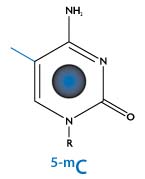
5-メチルシトシン (5-mC)
5-メチルシトシン は,S-アデノシルメチオニン(別名AdoMetまたはSAM)由来のメチル基がシトシン残基の炭素5位に転移することで生じるDNA修飾です。この転移は,DNAメチルトランスフェラーゼ酵素(DNMTs)によって触媒されます1。5-メチルシトシンは,最も研究されているDNAメチル化状態です。通常CpGジヌクレオチドのモチーフで生じますが,胚性幹細胞では非CpG領域のメチル化が観察されます2。アクティブ・モティフ社は,5-メチルシトシンDNAメチル化解析において,研究者をサポートするために特別に設計された,多くの抗体とアッセイキットを提供します。
5-メチルシトシンを含む,メチル化DNA断片濃縮のために,アクティブ・モティフ社は,5-メチルシトシンに特異的に結合する抗体を用いてメチル化DNA断片を免疫沈降する抗体ベースのMeDIP アッセイを提供します。このアッセイは簡便で,5-mC DNAを特異的に濃縮します。またアクティブ・モティフ社では,代替濃縮法として,CpGジヌクレオチドの5-メチルシトシンを含むDNA断片と特異的に結合するために,メチル化CpG結合タンパク質(MBD)を用いた手法も提供しています。アクティブ・モティフ社の MethylCollector™ Ultra キットは,5-mC DNAの結合と濃縮を強化するために,MBD2b/MBD3L1タンパク質複合体を用います。
5-メチルシトシンを産出するためのシトシン炭素5位にメチル基を転移させる DNA メチルトランスフェラーゼ酵素 (DNMT1, DNMT3a および DNMT3b)の研究に興味がある研究者には,DNMT Activity / Inhibition Assayキットをお勧めします。このラジオアイソトープを用いないアッセイキットは,DNMT酵素または核抽出物試料が96ウェルプレートにコートされているオリゴヌクレオチド基質をメチル化する能力をスクリーニングできます。比色法で測定する本キットは,分光光度計によって簡単に定量することができ,DNMT阻害のスクリーニングまたは試料間でのDNMT活性の変化の評価に理想的です。
がんを含む様々なヒトの疾患の特徴は,DNAメチル化のゲノムワイドな変更です。全ゲノムDNAメチル化解析に興味がある研究者のために,アクティブ・モティフ社のGlobal DNA Methylation Assay – LINE-1 は,ヒトゲノムDNAでのゲノム全体の5-mCレベルの検出および定量に最適なELISAベースのキットです。この96ウェルプレートを用いた解析は,ゲノム全体のDNAメチル化測定の代替法として,Long Interspersed Nucleotide Element 1 (LINE-1)繰り返し配列の5-mCレベルを定量する,ユニークなハイブリダイゼーションによるアプローチを利用します。このアプローチは,DNA捕獲に受動的な吸着を採用した方法よりも,より高い特異性と再現性を提供します。この解析法は,処置状況,患者の病歴,臨床予測といった変数から生じる複数の試料間での5-mCレベルの相対的な変化のスクリーニングに理想的です。
DNAメチル化研究の確認を行うためのポジティブコントロールをお探しの方に,アクティブ・モティフ社では Methylated DNA Standard Kit および Fully Methylated Jurkat DNAをお勧めします。Fully Methylated Jurkat DNA は,酵素処理により,すべてのCpGジヌクレオチドの5-メチルシトシンDNAメチル化を確実に行っています。このメチル化DNAは MethylCollector™ Ultra assay またはCpGメチル化解析を含む実験の優れたコントロールとして使用できます。Methylated DNA Standard Kit は,三つの異なるDNAスタンダード(非メチル化スタンダード,5-メチルシトシンスタンダード,5-ヒドロキシメチルシトシンスタンダード)から構成されます。各々のDNAの修飾を個々に解析するために,キットには全三種のDNAとそれに対応する配列特異的PCRプライマーが含まれます。これらのコントロールは,ドットブロット解析またはメチル化DNA濃縮実験のコントロールとして使用できます。.
Fe(II) および 2-オキソグルタル酸依存性シトシン・オキシゲナーゼ酵素のTetファミリーが 5-メチルシトシンを5-ヒドロキシメチルシトシン,5-フォルミルシトシンおよび 5-カルボキシルシトシンの変換に関与していることが最近の研究で報告されており,アクティブ・モティフ社では,この変換過程の解析用,すなわち5-メチルシトシンを様々なDNAメチル化バリアントへ変換する研究のために Recombinant Tet1 protein を提供しています3,4,5。
より複雑な5-メチルシトシンDNAメチル化解析のために,アクティブ・モティフ社ではエピジェネティクス受託サービスもご提供しています。一例として,ご利用いただけるサービスには,MeDIP-Seqやバイサルファイト変換がございます。エピジェネティクス受託サービスの詳細につきましては,こちらをご覧ください。
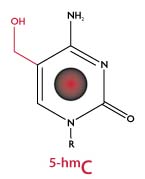
5-ヒドロキシメチルシトシン (5-hmC)
5-ヒドロキシメチルシトシン は,鉄依存的なデオキシゲナーゼのTetファミリーによって,5-メチルシトシン(5-mC)の酵素的酸化の結果として起こる,DNAメチル化修飾です3。 5-ヒドロキシメチルシトシンは,マウス・プルキンエ細胞や顆粒神経細胞といった特定の哺乳動物組織において観察されます6。 5-hmCは,DNMT タンパク質により,ホルムアルデヒドがDNAシトシンに追加されることによって産生されることが示唆されています7。
DNAメチル化研究のために様々な実験手法が存在していますが,これらのほとんどの技術は,5-メチルシトシンと非修飾シトシンを区別するために開発されました。5-ヒドロキシメチルシトシンに関連したこれらの手法による結果から,その多くの手法が5-hmC解析に適していないことが分かります。例えばバイサルファイトシーケンシングは,5-mCと5-hmCを区別することができません。またメチル化DNA結合タンパク質解析法(例:メチル化CpGアイランドリカバリーアッセイ;MIRA)は,5mC DNAのみを認識します8。哺乳動物のゲノムにおける5-ヒドロキシメチルシトシンの機能を十分に理解するためには,新しいツールと技術が不可欠です。
5-ヒドロキシメチルシトシンに特異的なメチル化DNA濃縮技術は,明確にヒドロキシメチル化DNAを単離して研究するアプローチが必要とされます。5-ヒドロキシメチル化DNA免疫沈降(hMeDIP)は,5-ヒドロキシメチルシトシン残基特異的抗体が5-ヒドロキシメチルシトシンを含むDNA断片に結合することを利用した抗体ベースの濃縮手法です。抗体/DNA複合体は,残りのゲノムDNAから分離され,十分に濃縮された5-ヒドロキシメチルシトシンDNAが溶出されます。アクティブ・モティフ社のhMeDIP キットは,この目的のために正確に設計されており,二本鎖DNAを用いることができるように最適化されています。
ヒドロキシメチル化DNA濃縮のための代替法は,5-メチルシトシンと明確に区別するために5-ヒドロキシメチルシトシン残基を修飾する方法です。その結果,5-ヒドロキシメチルシトシンを含むDNA断片が濃縮されます。アクティブ・モティフ社の Hydroxymethyl Collector™ キットは,二本鎖DNA中の5-hmC残基に改変されたグルコースの一部移行するために,β-グルコシルトランスフェラーゼ酵素の特性を利用します9。その後改変されたグルコースの化学的性質を用いて,ストレプトアビジン磁気ビーズを使用してヒドロキシメチル化DNAの濃縮を可能にするビオチン複合体が付加されます10。 この5-hmCの共有結合により標識は,5-ヒドロキシメチルシトシンを含むDNA断片の正確な捕捕を確実にし,特にヒドロキシメチル化DNAを他のシトシン修飾と分離する効率的な方法です。
メチル化感受性制限酵素の使用は,5-hmCと5-mCを区別する別の方法です。これらの二つのDNAメチル化フォームを直接区別する酵素は,現在のところ PvuRts1 I 制限酵素の一つだけです。 PvuRts1 I酵素は5-hmC DNAに特異的で,5-メチルシトシン残基または非メチル化DNAを切断しません11。
5-mCと5-hmCメチル化を識別するもう一つの方法は,5-ヒドロキシメチルシトシン残基の修正を標的にする方法です。この目的のために,β-グルコシルトランスフェラーゼ酵素は,ウリジン二リン酸グルコース(UDP-グルコース)から二本鎖DNA中の5-ヒドロキシメチルシトシン残基へグルコース部分を移動させ,グルコシル-5-hmC DNAを産生します。グルコシル化DNAは定量でき,またグルコシル感受性酵素を用いて5-hmCおよび5-mC DNAを識別するのに用いられます9。
5-メチルシトシから5-ヒドロキシメチルシトシンへの変換を研究することに興味がある研究者にとって,組換えTet1 タンパク質は有用です。5-ヒドロキシメチルシトシン上でのTet1タンパク質の継続的な反応により,5-フォルミルシトシンおよび5-カルボキシルシトシンへの変換が始まります。
ポジティブコントロールDNA,が必要な研究者のために,アクティブ・モティフ社は, Methylated DNA Standard キットを用意しています。Methylated DNA Standard Kitは,APC遺伝子プロモーターに由来する三種類の組換え標準品を含みます。各々の標準品は338塩基対で,122個のシトシン残基を含みます。標準品の一つは完全に非メチル化されており,二つ目の標準品は完全に5-メチルシトシンメチル化されています。もう一つは完全に5-ヒドロキシメチルシトシンメチル化されています。APC遺伝子のためのPCRプライマーは,Methylated DNA Standard Kitに含まれます。Methylated DNA Standard Kitは,ドットブロット解析,またはメチル化解析のコントロールとして使用できます。
5-ヒドロキシメチルシトシンDNA解析を実施できる環境にない場合には,必要とする実験を行うために,専門知識と経験を提供するアクティブ・モティフ社のエピジェネティクス受託サービスの利用を検討してください。弊社の5-ヒドロキシメチルシトシン解析サービスは,hMeDIP-SeqおよびhMeDIP-chipを含みます。詳細はこちらをご覧ください。
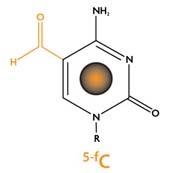
5-フォルミルシトシン (5-fC)
5-フォルミルシトシン は,Tet酵素が5-ヒドロキシメチルシトシンと反応する際に生じるDNAバリアントの一つであることが証明されています4,5。Tet酵素によるさらなる酸化により,5-フォルミルシトシンは5-カルボキシルシトシンに変換されます。様々なDNAメチル化バリアントを通しての5-メチルシトシンの酸化は,DNA脱メチル化のメカニズムを示しており,この脱メチル化経路は発生と胚細胞プログラミングの間の機能であると考えられています。5-フォルミルシトシンは,マウス胚性幹細胞(ES細胞)および主要なマウス器官に存在します4。このDNA修飾も,受精後の父方前核に現れ,5-メチルシトシンの消失に付随し,DNA脱メチル化過程に関与します12 。5-フォルミルシトシンの機能を解明するために,アクティブ・モティフ社は5-fC研究のための抗体を提供します。
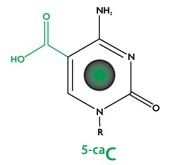
5-カルボキシルシトシン (5-caC)
5-カルボキシルシトシンは,Tet酵素が5-ヒドロキシメチルシトシンを,続いて5-フォルミルシトシンを酸化させる際に産出される,DNAメチル化バリアントの一つであることが確認されています4,5。5-カルボキシルシトシンまでの5-メチルシトシンの酸化は,DNA脱メチル化のメカニズムを示しており,この脱メチル化経路は発生と胚細胞プログラミングの間の機能であると考えられています。5-caCは,チミンDNAグリコシラーゼ(TDG)によってゲノムDNAから切除され,シトシン残基をその非修飾の状態に戻すことが示唆されています5。5-カルボキシルシトシンは,マウス胚性幹細胞(ES細胞)で確認されています4。このDNA修飾は受精後の父方前核に現れ,5-メチルシトシンの消失に付随し,このバリアントがDNA脱メチル化過程に関与します12。研究者が5-カルボキシルルシトシンの機能を解明するために,アクティブ・モティフ社は,5-caC研究のための抗体を提供します。
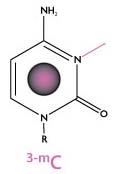
3-メチルシトシン (3-mC)
3-メチルシトシン3-メチルシトシンは,他のDNAメチル化バリアントとは異なり,Tetタンパク質ファミリーの酸化パスウェイとは関係していません。その代わり,3-メチルシトシンは,内在性S-アデノシルメチオニンのシトシン窒素3位の自然発生的な暴露を通して作られる付加物です。3-メチルシトシンは突然変異原性で,ヒト塩基除去修復(BER)を通して,または大腸菌AlkBタンパク質のヒト相同体を経た脱アルキルによって修復されます。ALKBH3を損失した細胞は,3-メチルシトシンの増加と細胞増殖の縮小を示します13。アクティブ・モティフ社は,この研究領域に興味がある研究者に,3-メチルシトシン特異的抗体を提供します。
引用文献
- Latham, T., Gilbert, N. & Ramsahoye, B. (2008) Cell Tissue Res 331, 31-55.
- Ramsahoye, B. et al. (2000) PNAS 97, 5237-5242.
- Tahiliani, M, et al. (2009) Science 324, 930-935.
- Ito, S. et al. (2011) Science 333, 1300-1303.
- He, Y.F. et al. (2011) Science 333, 1303-1307.
- Kriaucionis, S. and Heintz, N. (2009) Science 324, 929-930.
- Liutkeviciute, Z. et al. (2009) Nat. Chem. Biol. 5, 400-402.
- Jin, S.G. et al. (2010) Nucleic Acids Res doi:10.1093/nar/gkq223.
- Szwagierczak, A. et al. (2010) Nucleic Acids Res 38, e181.
- Song, C.X. et al. (2011) Nature Biotechnology 29, 68-72.
- Szwagierczak, A. et al. (2011) Nucleic Acids Res 39, 5149-5156.
- Inoue, A. et al. (2011) Cell Research 21, 1670-1676.
- Dango, S. et al. (2011) Mol Cell 44, 373-384.