Cart
Cart Products
<< Back to MOTIFvations Blog Home Page
Exploring Enhancer-Promoter Networks in Glioblastoma Stem Cells Highlights the Importance of 3D Regulatory Hubs
April 17, 2026
Table of Contents:
Do Alterations to the 3D Epigenome Architecture Underpin Glioblastoma?
The elevated degree of patient- and tumor-associated heterogeneity – due partly to genetic alterations and epigenetic plasticity - represents a significant obstacle to the development of effective treatments for glioblastoma. Single-cell transcriptomic studies in this aggressive type of brain cancer have confirmed intra-tumoral heterogeneity (Patel et al.) and described the presence of interconvertible cell states resembling cell types present during neurodevelopment (Neftel et al.). Subsequent investigations employing stem cells derived from glioblastoma patient tumors (glioma stem cells or GSCs) and ex vivo organoid-based models also defined distinct transcriptional and epigenetic states in glioblastoma; however, the complex regulatory networks underpinning cell function remained somewhat undefined. Recent epigenetic research has described how dynamic alterations in the 3D architecture of the epigenome can regulate gene expression and cell identity by altering the physical proximity of gene regulatory elements. While enhancer-promoter interactions generally regulate the expression of a single gene, studies have revealed 3D regulatory “hubs” composed of highly interacting promoters and enhancers that mediate elevated transcription of multiple genes critical to cell identity. Furthermore, dysregulated communication between enhancer-promoter pairs, driven by genetic and epigenetic mechanisms, also occurs during tumor initiation, maintenance, and progression.
Altogether, these data suggested that dysregulation of enhancer-promoter interactions within 3D regulatory hubs could drive tumor-promoting transcriptomic/epigenetic programs that underpin the development and aggressiveness of cancers such as glioblastoma. Recently, researchers led by Howard A Fine and Effie Apostolou (Weill Cornell Medicine) profiled 3D enhancer-promoter networks in patient-derived GSCs to identify central 3D regulatory hubs that may drive tumorigenesis and other glioblastoma-associated characteristics. Excitingly, their findings, as reported in Molecular Cell, demonstrated that i) hubs displayed enrichment for coregulated genes and expanded tumor-associated networks; ii) hub silencing altered transcriptional states and cell properties; and iii) hubs associated with both tumor-specific and universal tumorigenesis programs across distinct cancers (Breves and Di Giammartino et al.). Overall, this exploration of enhancer-promoter networks in GSCs highlighted the relative importance of 3D regulatory hubs in glioblastoma.

3D Regulatory Hubs Identified as Central Regulators of Glioblastoma Tumorigenicity
The authors first profiled GSCs isolated from glioblastoma patient tumor samples by integrating various datasets - H3K27ac ChIP-seq, H3K27ac HiChIP (Mumbach et al.), ATAC-seq, and RNA-seq - to construct comparative 3D enhancer-promoter maps. The HiChIP technique combines chromosome conformation capture with immunoprecipitation- and tagmentation-based library preparation to enable genome-wide mapping of the 3D interactions between active enhancers and promoters, while H3K27ac marks active enhancer elements. These data highlighted sample-specific remodeling of the chromatin and enhancer landscapes, which partly reflected the known molecular subtypes of the original tumors. H3K27ac HiChIP analysis of GSCs - which aimed to define how GSC-specific and subtype-specific enhancers and promoters communicate in 3D - uncovered thousands of enhancer and promoter regions engaged in multiple distinct interactions (ranging from 2 to over 100) that promoted increased gene transcription, which indicated the formation of 3D regulatory hubs in GSCs. Furthermore, a greater number of interactions within hubs scaled with higher transcriptional levels, and subtype-specific signature genes displayed significantly higher connectivity. Overall, these data provide evidence for the active regulatory nature of hub interactions and the link between cell-type-specific 3D interactivity and gene activity in glioblastoma.
The authors next demonstrated links between 3D regulatory hub-associated genes and pro-tumorigenic programs, glioblastoma biology, and worse patient survival, further highlighting hubs as key regulatory elements. The study also reported that these hubs displayed conservation across independent samples and datasets encompassing GSCs and primary glioblastoma samples (even in the context of glioblastoma-associated heterogeneity). While 3D regulatory hubs regulated pro-tumorigenic and glioblastoma-associated genes, the authors also found that they coordinated the broader activation of larger, previously unappreciated transcriptional networks. Overall, these results suggest that 3D regulatory hubs in glioblastoma function as centers of transcriptional coregulation, promoting the robust and coordinated expression of genes/gene networks that support tumorigenesis and other glioblastoma-associated characteristics.
In the next section of this fascinating study, the team described how epigenetically silencing a single 3D regulatory hub (with an unknown role in glioblastoma) via CRISPR interference sufficed to perturb the activity of associated genes and the cellular properties of GSCs; overall, hub silencing shifted the global transcriptional program of GSCs towards a less pro-tumorigenic state and reduced the tumorigenic activity of GSCs. This evaluation provided proof of concept for the role of 3D hubs as centers of GSC regulation and highlighted the potential of the analytical approach employed in this study for defining novel regulatory nodes central to transcriptional programs and cellular behavior.
But do 3D regulatory hubs represent a glioblastoma-specific phenomenon, and just what underpins their formation? An analysis of H3K27ac HiChIP cancer datasets across sixteen cancer types found results similar to those in the GSC samples: 3D regulatory hubs in each cancer type associated with genes critical to tumor identity and tumorigenesis. Importantly, the authors also discovered that each cancer type possessed highly conserved and cancer-specific hyperconnected 3D regulatory hubs. Finally, they explored potential mechanisms underpinning hub formation; while genetic alterations explained only a small fraction of 3D regulatory hub hyperconnectivity, the more significant contribution of epigenetics involved lineage-specific transcription factors, architectural factors, and co-activators. Indeed, the study identified three transcription factors - RUNX2, PGR, and FOXA1 – whose elevated expression correlated with aggressive disease in glioblastoma.
The Contribution of AbFlex Antibodies
Overall, this exciting study suggests that 3D regulatory hubs play a central role in promoting tumorigenicity in glioblastoma (and other tumors); as such, targeting factors that support hub organization and function may provide an opportunity to gain a deeper understanding of the regulatory programs that underpin them and to define novel therapeutic targets.
Of note, this research involved the use of an AbFlex® antibody raised against H3K27ac from Active Motif. AbFlex antibodies are highly specific, reproducible recombinant antibodies generated using defined DNA sequences. Each AbFlex antibody contains a sortase recognition motif that enables the direct and reproducible covalent attachment of various elements using Sortag-IT™ Labeling Kits, a 6xHis Tag for use with nickel-based purification systems, and a Biotinylation Tag sequence for enzymatic biotin conjugation. Check out the full range of AbFlex® antibodies now!
About the author
Stuart P. Atkinson, Ph.D.
Stuart was born and grew up in the idyllic town of Lanark (Scotland). He later studied biochemistry at the University of Strathclyde in Glasgow (Scotland) before gaining his Ph.D. in medical oncology; his thesis described the epigenetic regulation of the telomerase gene promoters in cancer cells. Following Post-doctoral stays in Newcastle (England) and Valencia (Spain) where his varied research aims included the exploration of epigenetics in embryonic and induced pluripotent stem cells, Stuart moved into project management and scientific writing/editing where his current interests include polymer chemistry, cancer research, regenerative medicine, and epigenetics. While not glued to his laptop, Stuart enjoys exploring the Spanish mountains and coastlines (and everywhere in between) and the food and drink that it provides!
Contact Stuart on X with any questions
Related Articles
Guide to Understanding the Benefits and Uses of Recombinant Antibodies
May 21, 2020
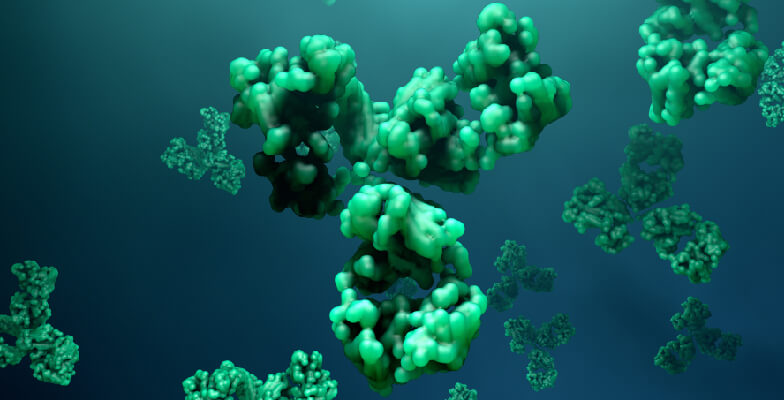
Antibodies are one of the most common, and most powerful, tools used by researchers. This article covers what recombinant antibodies are, and how they are different from polyclonal and monoclonal antibodies.
Read More
<< Back to MOTIFvations Blog Home Page